





Welcome to the Interstate 5 Blues Association
A place to belong and enjoy the poetry of Blues music while helping others.
Hello and Thank You for Stopping by.
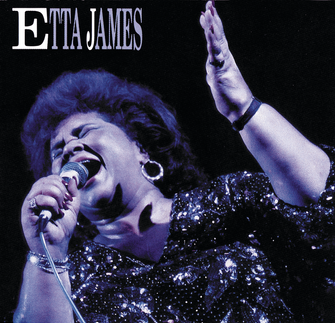
Etta James, (Jan. 25, 1938 – Jan. 20, 2012), a legendary Blues singer widely recognized as one of the most dynamic singers in music history. Her powerful voice and versatility across R&B, blues, gospel, and rock and roll, earned her several Grammy Awards and her induction into the Rock and Roll Hall of Fame underscored her influence and legacy within the music industry. She stands as an influential figure whose impact reverberates throughout modern music. Her dynamic talent has left an indelible mark on countless artists across various genres. The timeless classic “At Last”, became her signature piece and remains a timeless classic.

Welcome to the Interstate 5 Blues Association
Where the soul of blues lives—and so can you! We are dedicated to preserving the legacy of Blues music, supporting artists, and connecting fans worldwide, especially veterans of the U.S. Armed Forces. Join us in celebrating the music, history, and culture of the Blues.
Hello and Thank You for Stopping by.
The Interstate 5 Blues Association, Inc. is classified as a California Nonprofit Public Benefit Corporation under the U.S. Internal Revenue Code Section 501(c) (3).
Hereinafter, referred to as “I-5 Blues Association”.
Your contributions are tax deductible as a charitable contribution to the fullest extent of the law. Every dollar we receive directly supports our mission of preserving, promoting, and celebrating Blues music.
The mission of Interstate 5 Blues Association is to actively preserve, promote, and celebrate the rich heritage of Blues music while preventing and reducing the suicide rate among U.S. Veterans, their families and Blues music professionals in our area of service.
Veteran suicide remains a persistent and high-priority public health challenge.
A RESOURCE
The Interstate 5 Blues Association is a resource for advancing equity and support for those who are systematically denied a full opportunity to participate in aspects of economic, social, and civic life and who may not show any signs of intent to harm themselves, however, some actions and behaviors displayed can be signs that they need help.
Chad, a twenty-three-year-old former government employee, who had been on an aggressive job search suddenly stops responding to texts, ignoring phone calls, and avoiding face-to-face conversations. Such behaviors can leave friends and family members feeling confused, worried, or even hurt.
However, this shift can serve as an early warning system that one may be battling with thoughts of self-harm or suicide. It could well be a signal that professional support might be needed.
Nearly all of Gen Z youth, 94 percent report experiencing mental health challenges in an average month, while stigma still continues to be a barrier to care.
This is according to the recent BlueSky Youth Mental Health Survey, compiled by Blue Shield of California’s BlueSky youth mental health initiative and Children Now.
Additionally, among teenagers and young adults who’ve sought professional support but didn’t receive it, 35 percent cited embarrassment as a barrier. Even youth who did receive care said stigma and shame were persistent obstacles.
ABOUT BLUESKY
Blue Shield of California’s BlueSky youth mental health initiative is a multi-year effort to promote emotional well-being for young people across California. Since 2019, BlueSky has supported over 25,000 youth and educators through on-campus and online mental health services, educator training and youth-driven advocacy programs.
OLDER ADULTS AND SUICIDE
While youth suicide rates garner significant media attention, the demographic with the absolute highest suicide mortality rate in the United States is the elderly, specifically men aged 75 and older.
What motivates an older adult to try suicide can be quite different than someone younger.
Suicide in the elderly is often characterized by higher intent and more lethal methods, resulting in a much higher ratio of deaths to attempts. For every four suicide attempts by an older adult, one ends in death, a lethality rate up to five times higher than that of younger age groups.
Mental illness and substance abuse, as with younger people, can be precursors to suicide in older adults. But recent research shows that suicide risks are more prevalent in older adults because of:
- Loneliness or physical isolation
- Death of a spouse or partner
- Feeling like a burden to others, or
- Financial troubles from living on a fixed income
Older adults’ suicide attempts also tend to be more deadly than those of younger adults. According to a 2023 U.S. Department of Health and Human Services (HHS) report, for every four suicide attempts by older adults, one ends in death. That is a death rate between two and five times higher than other age ranges.
Research shows when Veterans, their families or an unemployed or underemployed Blues music professionals have access to the proper support before a crisis happens, lives can be saved.
I5 Blues Association is actively involved in preventing and reducing the suicide rate among U.S. Veterans and Blues professionals. See how under our programs.
If you need to talk, the 988 Lifeline is here.
INTERSTATE 5 BLUES AS A COMMUNITY
Interstate 5 Blues Assoiation is a Blues music community offering an opportunity for a greater sense of purpose, more supportive relationships, and better health while respecting and advancing the long held therapeutic effects of Blues music.
OUR STORY
Born from barrooms, jam sessions, and family traditions, the I-5 Blues Association was founded by a group of passionate musicians, professional entertainment producers, and awesome fans.
It began as a grassroots effort to keep the Blues alive, and today, it stands as a beacon for connection, belonging, and the enduring power of music.
Founded on the principles of camaraderie, education, and advocacy, our association serves as a hub for all things blues-related.
We are not just an organization—we are a family. And in this family, the blues belong to everyone.
Within the I-5 Blues Association there is a quality of acceptance of the way things are, however miserable.
This community is one where we are asked to show up just as we are right now, in the body, life, job, or car we have, or don’t have. Truly living. In the present. Right now.
Everything we do, from organizing events and concerts, to providing resources for musicians and researchers, to being strong advocates for suicide prevention and unhoused veterans of the American Armed Forces showcases our commitment to fostering a vibrant and inclusive blues community.
From seasoned fans to curious newcomers, from teenage guitarists to veterans with harmonicas, we are here to ensure that everyone has a place in the blues family.
VISION SUICIDE
Our vision of preventing and reducing the suicide rate among U.S. miliary veterans and senior citizens is advanced by an unapologetic support for the often neglected and underserved communities such as our unhoused U.S. Armed Forces Veterans, their families, the aged and Medically Underserved Populations (MUPs) such as Blues Music production professionals, and their families, who often share overlapping traits of the above demographics which reinforce each other. This making both groups top priorities for our services.
RURAL COMMUNITIES
The target populations include people living, working or playing near the I-5 corridor, spanning from San Diego, California to Blaine, Washington. Much of this being rural communities.
The risk of suicide in the United States is not just demographic but deeply geographic. Rural communities face a compounding crisis of social isolation, high firearm ownership, and a catastrophic shortage of mental health providers.
As of 2025, 92% of rural counties are designated as primary care shortage areas, and two-thirds of all mental health professional shortage areas (HPSAs) are located in rural regions.
Source: Celli Horstman and Arnav Shah, The State of Rural Primary Care in the United States (Commonwealth Fund, Nov. 2025). https://doi.org/10.26099/03v3-h645
Forty-three million people live in rural areas with primary care health professional shortages.
For the more than 60 million people, or one in five Americans, who live in rural areas, over a third (38 per cent) of rural adults used the emergency room for care that could have been provided at a primary care practice.
COMMUNITY PARTICIPATION
We do this with heavy community participation including efforts such as Mental Health California while respecting and advancing the long held therapeutic effects of Blues music.
Mental Health California offers free tools for classrooms and youth groups seeking to bolster their mental health and substance use prevention education for all students.
The Interstate 5 Blues Association is a resource for presenting underserved U.S. Armed Forces Veterans, their families and underserved Blues music production professionals with an opportunity avenue for greater exposure and overall emotional well-being for a greater sense of purpose, more supportive relationships, and better health.
Our Corporate Status
The Interstate 5 Blues Association, Inc. is classified as a California Nonprofit Public Benefit Corporation under the U.S. Internal Revenue Code Section 501(c)(3). Hereinafter, referred to as “I-5 Blues Association”.
Your contributions are tax deductible as a charitable contribution to the fullest extent of the law. Every dollar we receive directly supports our mission of preserving, promoting, and celebrating Blues music.